ChargeStripe

Pivoting to contactless payments during the pandemic

impact

+13% increase in revenue year over year.

Due to time constraints, I wasn't able to test prototypes with users. If I had to go back, I would prioritize another round of testing prior to developer handoff. I was able to gain feedback about our early high-fidelity designs from users we had previously interviewed which garnered positive feedback and continued to work with the PM to conduct flash interviews with users for our design concepts.

Reporting consisted of various screens; visitors, leads, customers, purchases, commissions, and affiliates. Rather than bundling them as one large update, we opted for a phased approach over the next several months. In order to introduce the updates to users, I worked closely with the PM and growth team to design comprehensive communication releases to users as well as design a tool-tip walkthrough for users that see the updated designs for the first time.

We knew the risk of forgoing usability tests, and focused on functionality expecting corner cases to surface. We wanted to set the expectation for our users that it would not be a perfect release, so we branded the redesigned screens as beta to help ease the transition. I set up an in-app survey using a tool called Refiner to solicit feedback through in-app surveys and encouraged users to contact the team about any bugs or issues. All of this feedback was stored in a research file for iterating.

Problem

Small businesses aren't able to process payments face-to-face due to social distancing.

Due to time constraints, I wasn't able to test prototypes with users. If I had to go back, I would prioritize another round of testing prior to developer handoff. I was able to gain feedback about our early high-fidelity designs from users we had previously interviewed which garnered positive feedback and continued to work with the PM to conduct flash interviews with users for our design concepts.

Reporting consisted of various screens; visitors, leads, customers, purchases, commissions, and affiliates. Rather than bundling them as one large update, we opted for a phased approach over the next several months. In order to introduce the updates to users, I worked closely with the PM and growth team to design comprehensive communication releases to users as well as design a tool-tip walkthrough for users that see the updated designs for the first time.

We knew the risk of forgoing usability tests, and focused on functionality expecting corner cases to surface. We wanted to set the expectation for our users that it would not be a perfect release, so we branded the redesigned screens as beta to help ease the transition. I set up an in-app survey using a tool called Refiner to solicit feedback through in-app surveys and encouraged users to contact the team about any bugs or issues. All of this feedback was stored in a research file for iterating.

Solution

Payments anytime, anywhere.

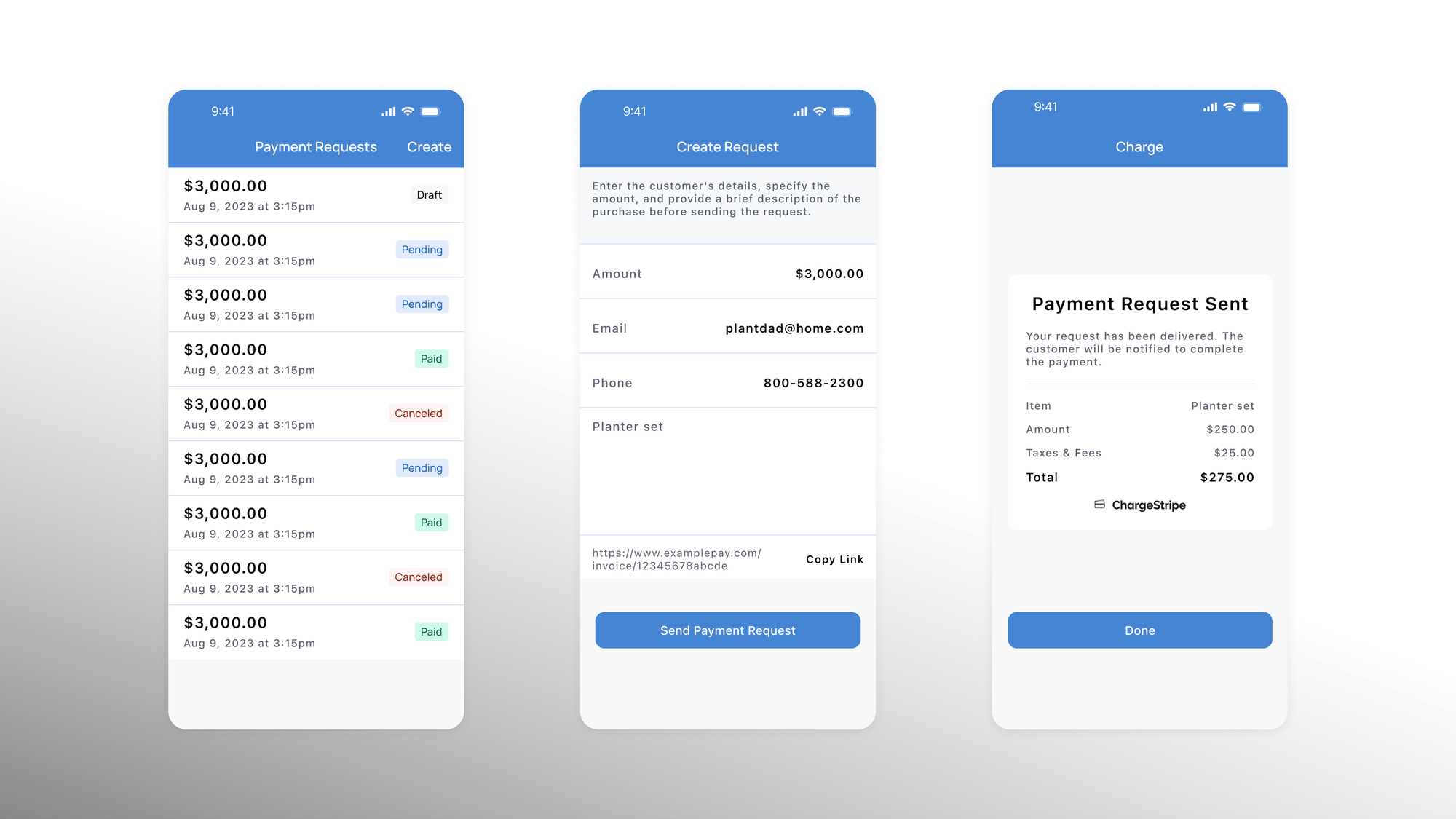
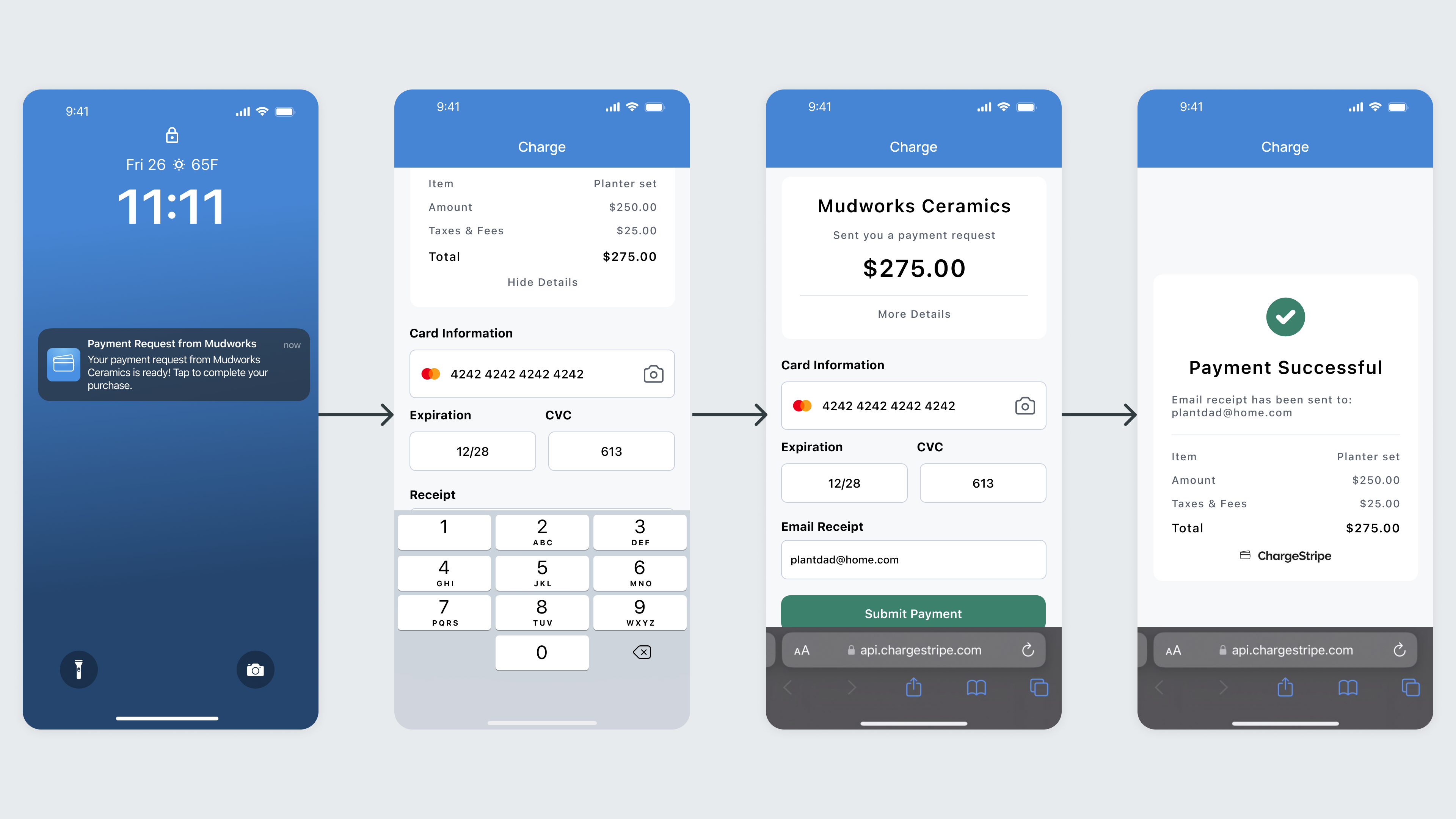
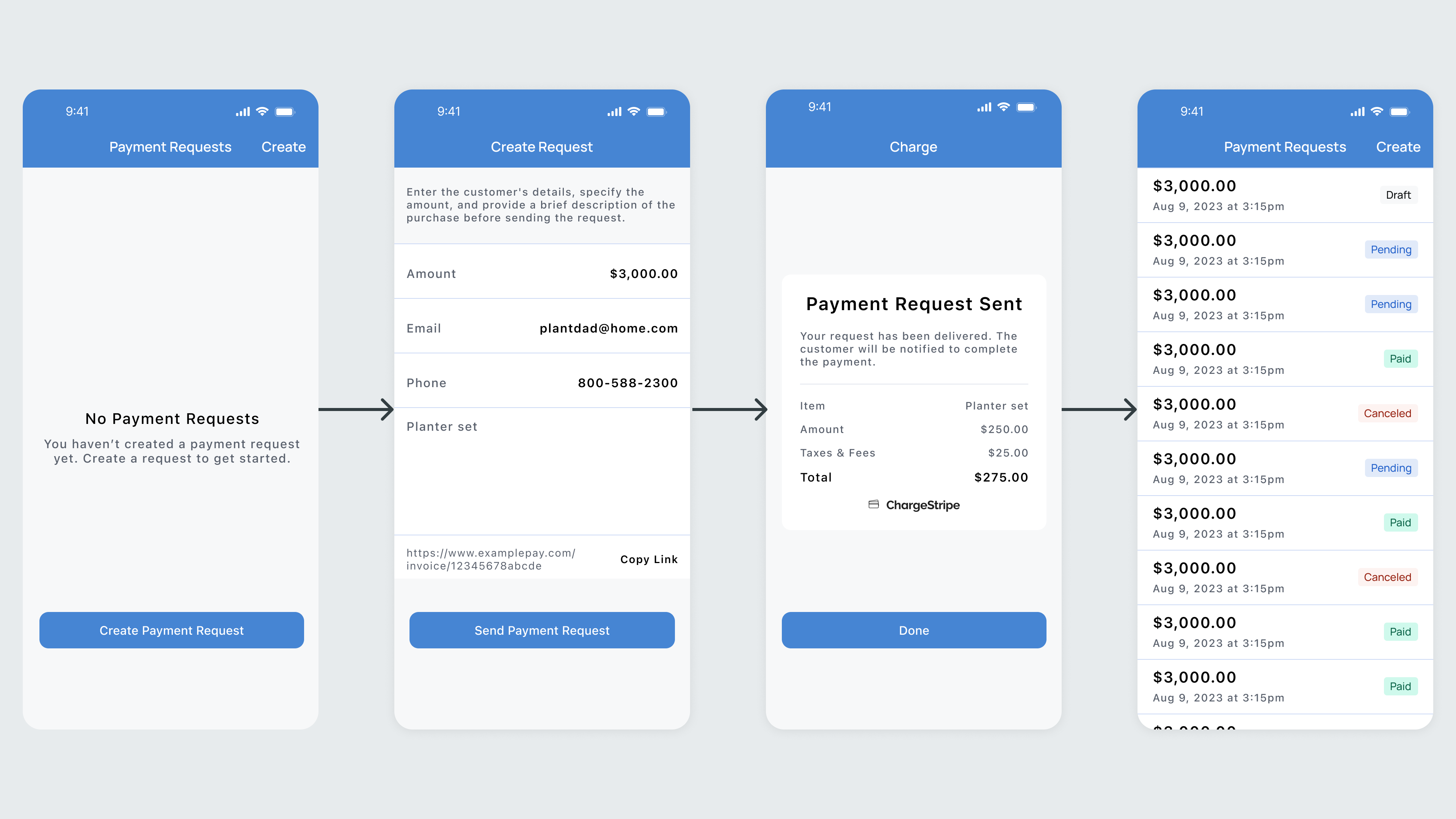
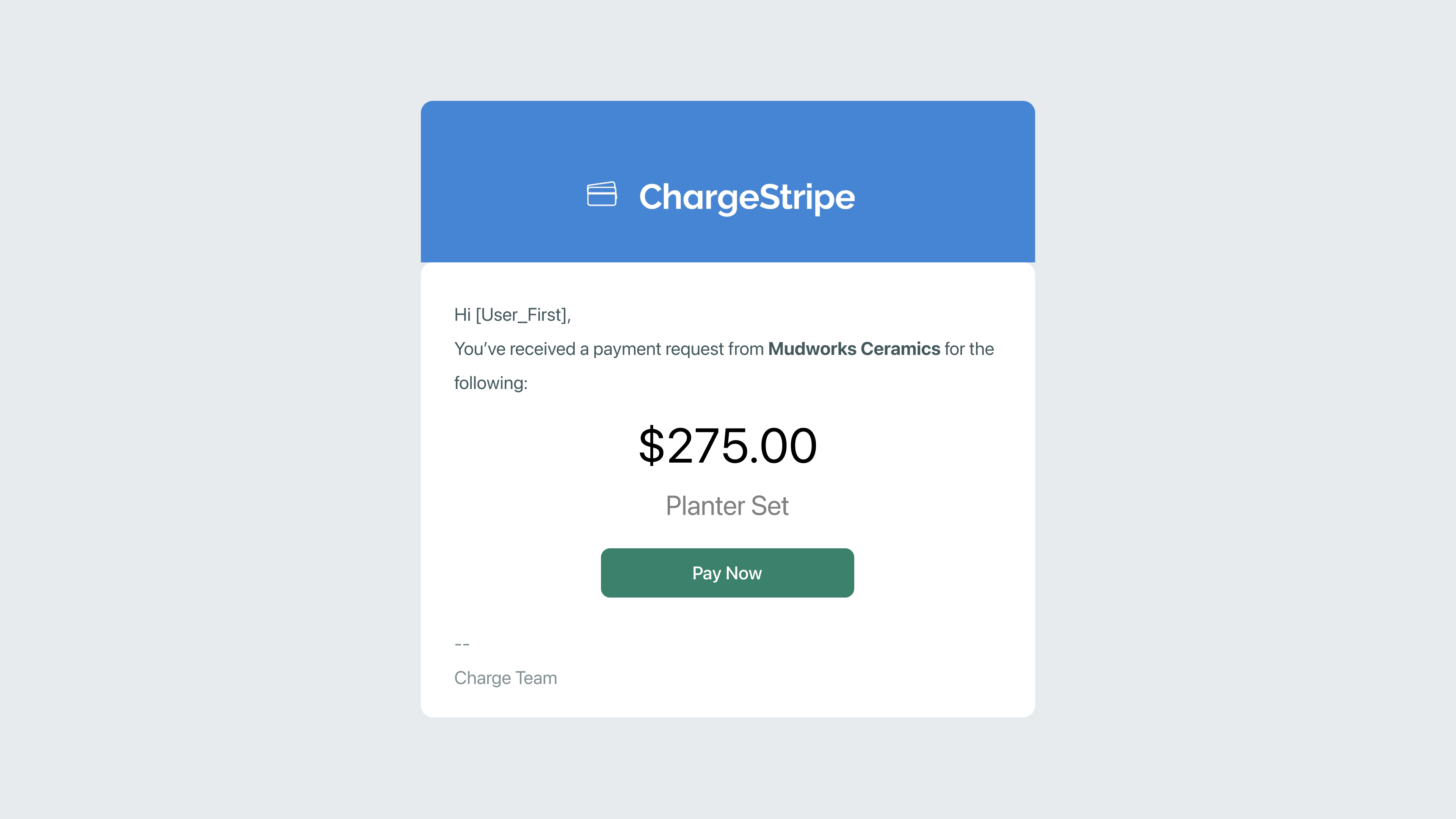
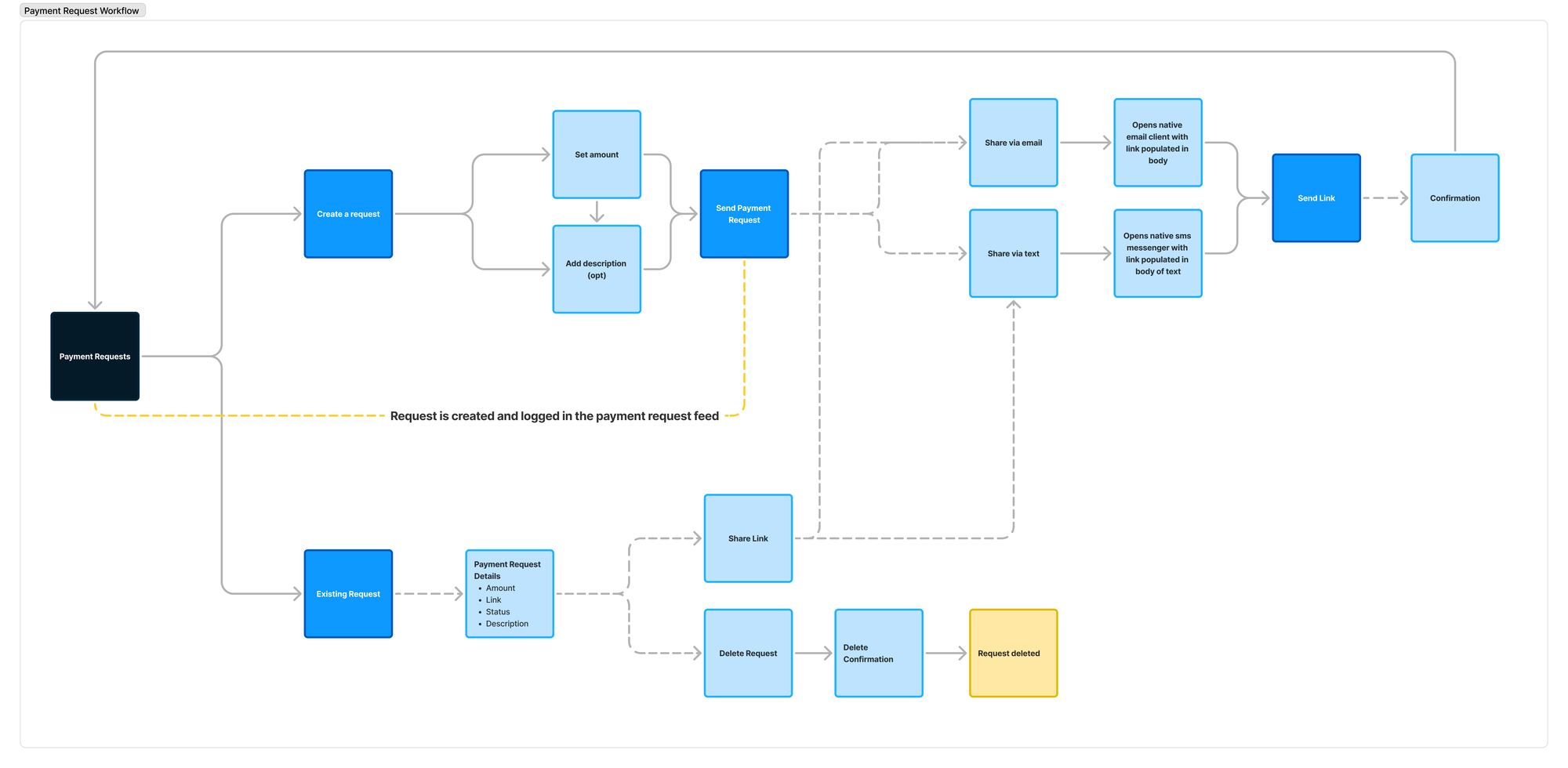
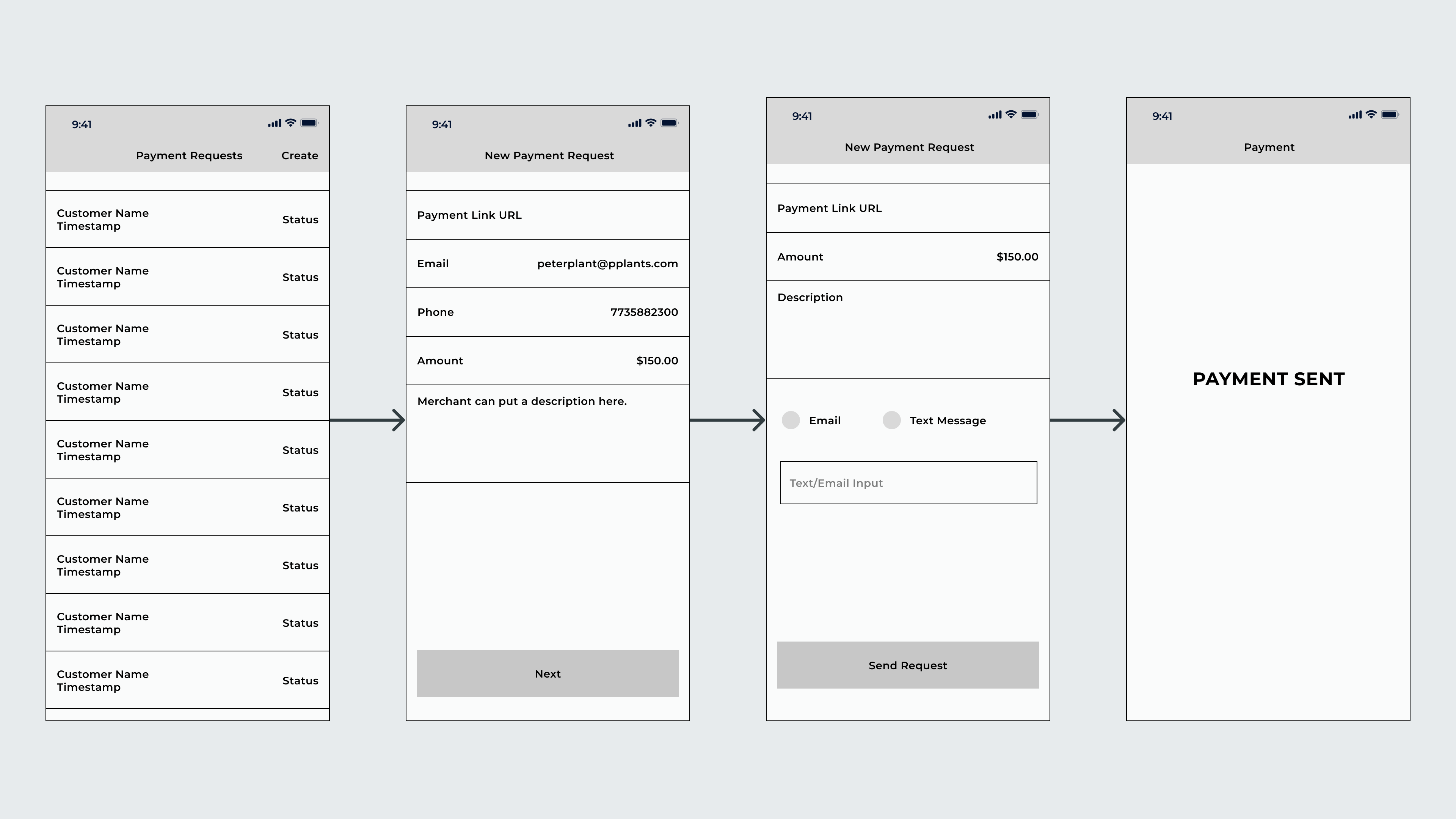
I led the end-to-end design of a payment request feature, enabling merchants to send payment links directly to customers' phones, eliminating the need for face-to-face transactions entirely.

Process

Wireframes, user flows, and final design.

Due to time constraints, I wasn't able to test prototypes with users. If I had to go back, I would prioritize another round of testing prior to developer handoff. I was able to gain feedback about our early high-fidelity designs from users we had previously interviewed which garnered positive feedback and continued to work with the PM to conduct flash interviews with users for our design concepts.

Reporting consisted of various screens; visitors, leads, customers, purchases, commissions, and affiliates. Rather than bundling them as one large update, we opted for a phased approach over the next several months. In order to introduce the updates to users, I worked closely with the PM and growth team to design comprehensive communication releases to users as well as design a tool-tip walkthrough for users that see the updated designs for the first time.

We knew the risk of forgoing usability tests, and focused on functionality expecting corner cases to surface. We wanted to set the expectation for our users that it would not be a perfect release, so we branded the redesigned screens as beta to help ease the transition. I set up an in-app survey using a tool called Refiner to solicit feedback through in-app surveys and encouraged users to contact the team about any bugs or issues. All of this feedback was stored in a research file for iterating.

Reflection

Speed is a design decision.

Due to time constraints, I wasn't able to test prototypes with users. If I had to go back, I would prioritize another round of testing prior to developer handoff. I was able to gain feedback about our early high-fidelity designs from users we had previously interviewed which garnered positive feedback and continued to work with the PM to conduct flash interviews with users for our design concepts.

Reporting consisted of various screens; visitors, leads, customers, purchases, commissions, and affiliates. Rather than bundling them as one large update, we opted for a phased approach over the next several months. In order to introduce the updates to users, I worked closely with the PM and growth team to design comprehensive communication releases to users as well as design a tool-tip walkthrough for users that see the updated designs for the first time.

We knew the risk of forgoing usability tests, and focused on functionality expecting corner cases to surface. We wanted to set the expectation for our users that it would not be a perfect release, so we branded the redesigned screens as beta to help ease the transition. I set up an in-app survey using a tool called Refiner to solicit feedback through in-app surveys and encouraged users to contact the team about any bugs or issues. All of this feedback was stored in a research file for iterating.

Behind the screens

There's more to this story.

This page is intentionally lean. Grab some time on my calendar and I'll walk you through everything behind it: the constraints, the pivots, and what I'd do differently.